NEW VOLVO XC60 & XC90 PHEV: HUGE RANGE BOOST!
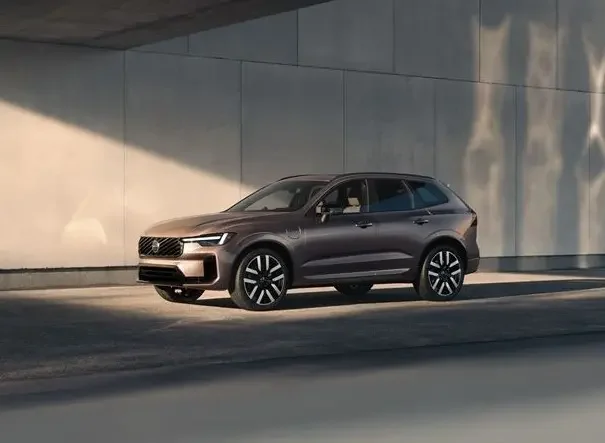
Volvo has just unveiled a major upgrade for two of its most important SUVs – and the headline figures are seriously impressive.
The Volvo XC60 and XC90 plug-in hybrids have been given a brand-new long-range PHEV powertrain, bringing dramatically more electric-only driving range.
And we're not talking about an extra 10 or 20 miles.
The new XC60 can travel up to 124 miles on electric power alone, while the larger seven-seat XC90 can manage up to 99 miles.
That is more than double the electric range of the previous-generation PHEV system.
And suddenly, these aren't plug-in hybrids that simply allow you to do the school run without starting the petrol engine.
These are SUVs that could genuinely allow many drivers to complete several days of normal driving without using petrol at all.
VOLVO HAS DOUBLED DOWN ON PLUG-IN HYBRIDS
This is an interesting move from Volvo.
The company has been heavily investing in fully electric cars, with models such as the EX30, EX40, EX90 and the new EX60.
But Volvo also recognises that not every driver is ready to make the jump to a fully electric car.
Some people don't have access to home charging.
Some regularly travel long distances.
And some simply aren't ready to give up the flexibility of a petrol engine.
That's where these new long-range PHEVs come in.
Volvo describes them as a bridge towards full electrification.
And with this latest technology, that bridge has suddenly become a lot more convincing.
Volvo's own research has found that its plug-in hybrid cars are already driven on electric power for around half of the distance travelled, showing that customers are using the cars electrically when the range allows it.
THE BIG NUMBER: 124 MILES
Let's start with the car most people will probably be interested in – the XC60.
The new XC60 Long Range Plug-in Hybrid can deliver up to 124 miles of electric-only range under the European WLTP test cycle.
That's an absolutely enormous increase over the current XC60 PHEV.
For comparison, the existing XC60's plug-in hybrid system offers roughly 50 miles of electric range in UK specification, depending on version and testing configuration.
The new car more than doubles that.
And it means that for a driver covering, say, 20–30 miles a day, the XC60 could potentially cover several days of normal driving electrically before needing to use its petrol engine.
That completely changes the proposition of a PHEV.
AND THE XC90 GETS A HUGE BOOST TOO
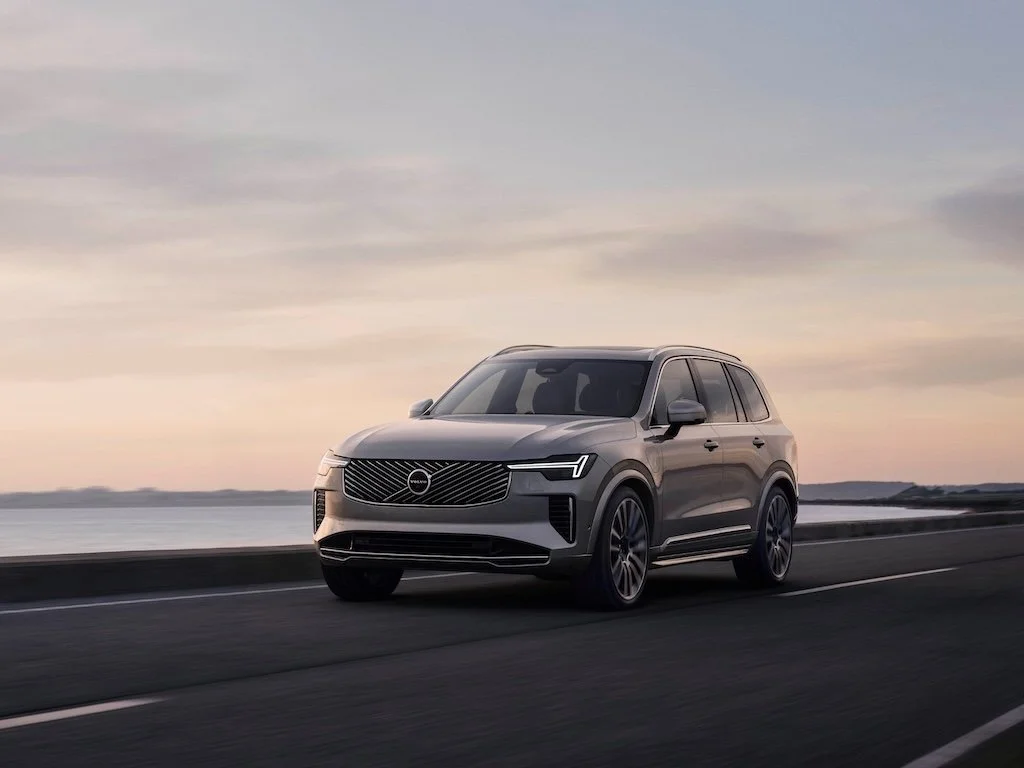
The bigger Volvo XC90 gets exactly the same basic long-range philosophy.
But because it's a larger and heavier seven-seat SUV, its electric range is slightly lower.
Volvo quotes up to 99 miles of electric-only range for the new XC90 Long Range PHEV in Europe.
Again, that's more than twice the range of the previous PHEV setup.
And that's particularly impressive when you consider what the XC90 is.
This isn't a tiny hatchback with a massive battery.
It's a large luxury SUV with seven seats, all-wheel drive and the ability to tow – yet Volvo has managed to give it nearly 100 miles of electric range.
THE SECRET IS A MASSIVE NEW BATTERY
So how has Volvo managed it?
The answer is sitting underneath the car.
Both SUVs now get a 41.2kWh battery pack, with 37.9kWh usable.
To put that into perspective, the previous-generation long-range PHEV battery used in these cars had around 18.8kWh of gross capacity.
So Volvo has more than doubled the size of the battery.
But the company hasn't simply bolted a massive battery onto the existing cars.
The new battery has been integrated into the vehicle floor, borrowing technology and engineering ideas from Volvo's fully electric models.
That helps package the extra capacity without dramatically compromising the interior.
The result is a PHEV that starts to behave much more like an electric car.
THE ELECTRIC MOTOR HAS ALSO BEEN UPGRADED
It's not just the battery that's new.
Volvo has also fitted a more powerful electric motor.
The new motor produces 130kW, or around 177 PS, compared with approximately 115kW/156 PS in the previous system.
That extra electric power should make the cars feel more responsive when they're being driven in electric mode.
And that's important.
One of the weaknesses of some PHEVs is that the electric motor can feel like it's simply there to save fuel rather than actually providing a convincing EV experience.
Volvo is trying to change that.
The idea is for these cars to feel much more like electric vehicles during everyday driving – with the petrol engine effectively becoming the back-up plan for longer journeys.
THE XC60 STILL HAS PLENTY OF PERFORMANCE
And don't think that giving the XC60 a massive battery means Volvo has forgotten about performance.
The range-topping XC60 T8 Long Range continues with a combined output of around 455hp.
That means you're getting a family SUV capable of serious performance while also being capable of travelling more than 120 miles without using the petrol engine.
That's a pretty unusual combination.
The T8 combines its turbocharged 2.0-litre petrol engine with the electric motor driving the rear axle, giving the car all-wheel drive.
And because electric motors deliver their torque instantly, the XC60 remains very quick.
WHAT ABOUT THE XC90?
The XC90 T8 Long Range also produces 455hp.
That's a lot of power for a seven-seat family SUV.
But what's arguably more important here is that Volvo hasn't sacrificed the XC90's main selling points to achieve the extra electric range.
You've still got the large cabin, seven-seat practicality, all-wheel drive and long-distance ability.
The difference is that the XC90 can now handle much more of your everyday driving without needing its petrol engine.
THIS COULD BE A GAME-CHANGER FOR PHEVS
Here's why this announcement matters.
The criticism of plug-in hybrids has always been fairly simple.
If the electric range is only 20 or 30 miles, drivers can easily end up using the petrol engine for much of their driving.
And if they don't plug the car in regularly, you've effectively got a heavy petrol car carrying around a battery that isn't being used properly.
Volvo is trying to address that problem.
Give people 100-plus miles of electric range, and suddenly charging the car becomes much more worthwhile.
If you can drive to work, do the school run, go shopping and get home again without using the petrol engine, the PHEV starts making much more sense.
And when you need to drive from London to Manchester, Scotland or Cornwall?
You've still got the petrol engine sitting there ready to take over.
That's the argument Volvo is making.
THE XC60 ALSO GETS A MAJOR DESIGN UPDATE
The XC60 isn't simply getting a new battery.
Volvo has given the exterior a much more comprehensive refresh.
The front end has been redesigned with a slimmer grille, new lighting and revised bodywork.
The famous Thor's Hammer headlights have also been updated, incorporating Matrix LED technology.
There are redesigned bumpers, new wheel designs and changes to the rear of the car.
It isn't an entirely new XC60 – the basic architecture remains familiar – but Volvo has done enough to make the car look considerably fresher.
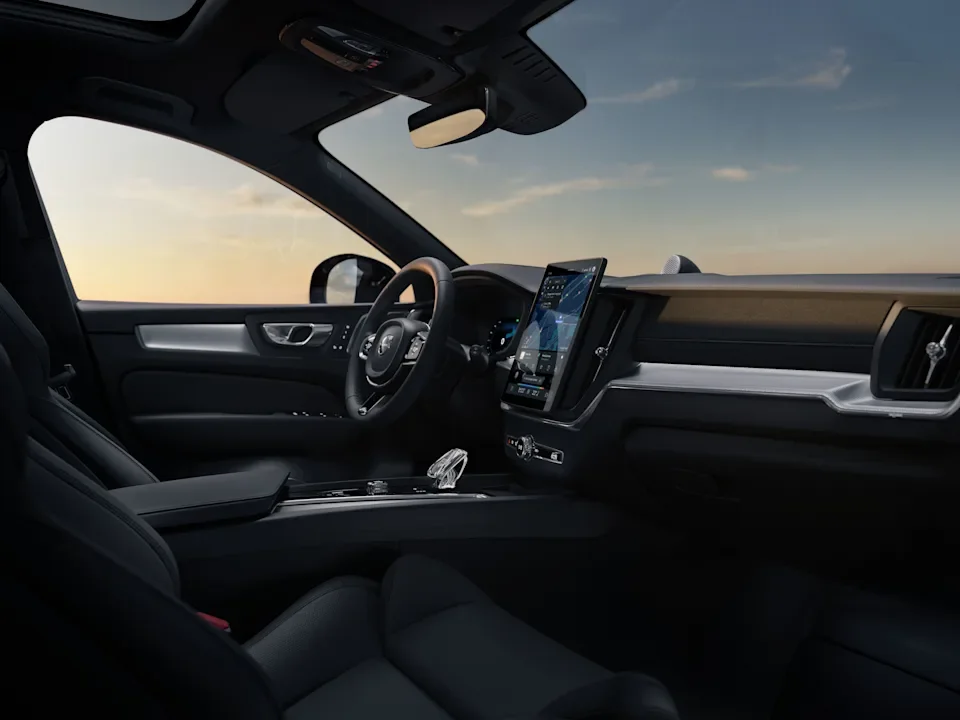
INSIDE, THERE'S MORE TECHNOLOGY
The cabin gets updates too.
The XC60 now features an 11.2-inch central touchscreen, along with Volvo's latest Google-based infotainment technology.
And one of the biggest technology changes is the arrival of Google Gemini as a more conversational voice assistant.
Rather than having to use rigid commands, the system is designed to understand more natural language.
It's another example of Volvo bringing technology from its newest electric cars into its combustion and hybrid models.
The XC90 also gets the updated infotainment system and Gemini integration.
SAFETY HASN'T BEEN FORGOTTEN
And, of course, this is Volvo.
So safety remains a major part of the story.
The updated XC60 gets additional sensors and upgraded driver-assistance technology.
Volvo has added technology designed to help prevent collisions, including systems capable of steering or braking to avoid certain situations.
There's also an improved 360-degree camera system and a new warning system that can alert occupants if a cyclist or vehicle is approaching before they open a door.
The latest version of Pilot Assist also gains additional functionality, including lane-change assistance.
THE RANGE FIGURES NEED A VERY IMPORTANT EXPLANATION
Now, if you've already seen stories about these cars today, you may have noticed something strange.
Some reports are saying:
XC60 – 78 miles
XC90 – 73 miles
While others are saying:
XC60 – 124 miles
XC90 – 99 miles
So which is correct?
Both – but they're using different testing standards.
The 124-mile XC60 and 99-mile XC90 figures are the European figures, based on the WLTP cycle.
The US versions are being quoted at around 78 miles for the XC60 and 73 miles for the XC90 under EPA testing.
So for a UK audience, the important numbers are:
🇬🇧 UK / European figures
XC60 Long Range PHEV – up to 124 miles WLTP
XC90 Long Range PHEV – up to 99 miles WLTP
Volvo's official European announcement gives maximum electric ranges of 200km for the XC60 and 160km for the XC90.
That's why you'll see different numbers appearing in American coverage.
WHEN CAN YOU GET ONE?
Volvo says production of the new long-range PHEV models will begin towards the end of 2026, with customer deliveries expected to begin in early 2027.
UK pricing and final UK specification will be important, and at the time of writing Volvo has not announced a UK price for these new long-range versions.
So we wouldn't recommend putting a definite UK price into a video or article just yet.
WHAT DOES THIS MEAN FOR VOLVO?
This is actually a pretty significant change in Volvo's strategy.
The company has been one of the manufacturers pushing hardest towards electric cars.
But the reality is that the transition to EVs hasn't happened as quickly as many manufacturers expected.
Volvo's answer is not to abandon electric cars.
Instead, it's giving customers another route.
You've got the fully electric EX60.
And now you've got the XC60 Long Range PHEV sitting alongside it.
The same applies at the top end, where the XC90 PHEV sits alongside the fully electric EX90.
It's essentially giving customers a choice.
Petrol when you need it.
Electric when you don't.
And with more than 100 miles of electric range in the XC60, that electric side of the equation is suddenly a lot more useful.
THE CAR CHAT TV VERDICT
So, is this the future of the plug-in hybrid?
Well, we're certainly more interested in PHEVs now than we were before.
The old argument was that plug-in hybrids didn't have enough electric range to really replace everyday petrol driving.
Volvo has basically taken that criticism and thrown a 41.2kWh battery at it.
And it has worked.
VOLVO XC60 LONG RANGE PHEV – 9/10
The good stuff:
✓ Up to 124 miles WLTP electric range
✓ 41.2kWh battery / 37.9kWh usable
✓ 455hp T8 available
✓ All-wheel drive
✓ Much more convincing EV-style everyday driving
✓ Petrol engine provides long-distance flexibility
✓ Major safety and technology upgrades
✓ Updated styling
The things we still need to know:
✗ UK pricing hasn't been announced
✗ Real-world winter range remains to be tested
✗ The huge battery adds weight
✗ Charging performance and costs will be important
✗ It remains more complicated than a pure EV
VOLVO XC90 LONG RANGE PHEV – 8.5/10
The good stuff:
✓ Up to 99 miles WLTP electric range
✓ 41.2kWh battery / 37.9kWh usable
✓ 455hp T8 powertrain
✓ Seven seats
✓ All-wheel drive
✓ Luxury and practicality
✓ Far more usable electric range than before
The downsides:
✗ Large and heavy SUV
✗ UK price yet to be announced
✗ Real-world range will inevitably be lower than WLTP
✗ Still relies on petrol for longer journeys
FINAL THOUGHT
For me, this is one of the most interesting PHEV announcements we've seen for a long time.
Not because Volvo has invented a new type of hybrid.
But because it's finally addressing the biggest weakness of the PHEV – electric range.
The XC60 can now potentially travel 124 miles without using a drop of petrol, while the seven-seat XC90 can manage up to 99 miles.
That's enough to make a genuine difference to how these cars are used every day.
And perhaps that's exactly what Volvo means when it calls these cars a bridge to the electric future.
You don't have to choose between petrol and electric anymore.
You can have both.
And for thousands of drivers who aren't quite ready to go fully electric, the new Volvo XC60 and XC90 could be a very tempting halfway house.
What do you think?
Would you buy a Volvo XC60 PHEV capable of 124 miles on electric power, or would you go fully electric and buy the new EX60 instead?
Let us know in the comments.
And as always, don't forget to like, subscribe and join us here at Car Chat TV for all the latest car news, reviews and electric-car updates.
